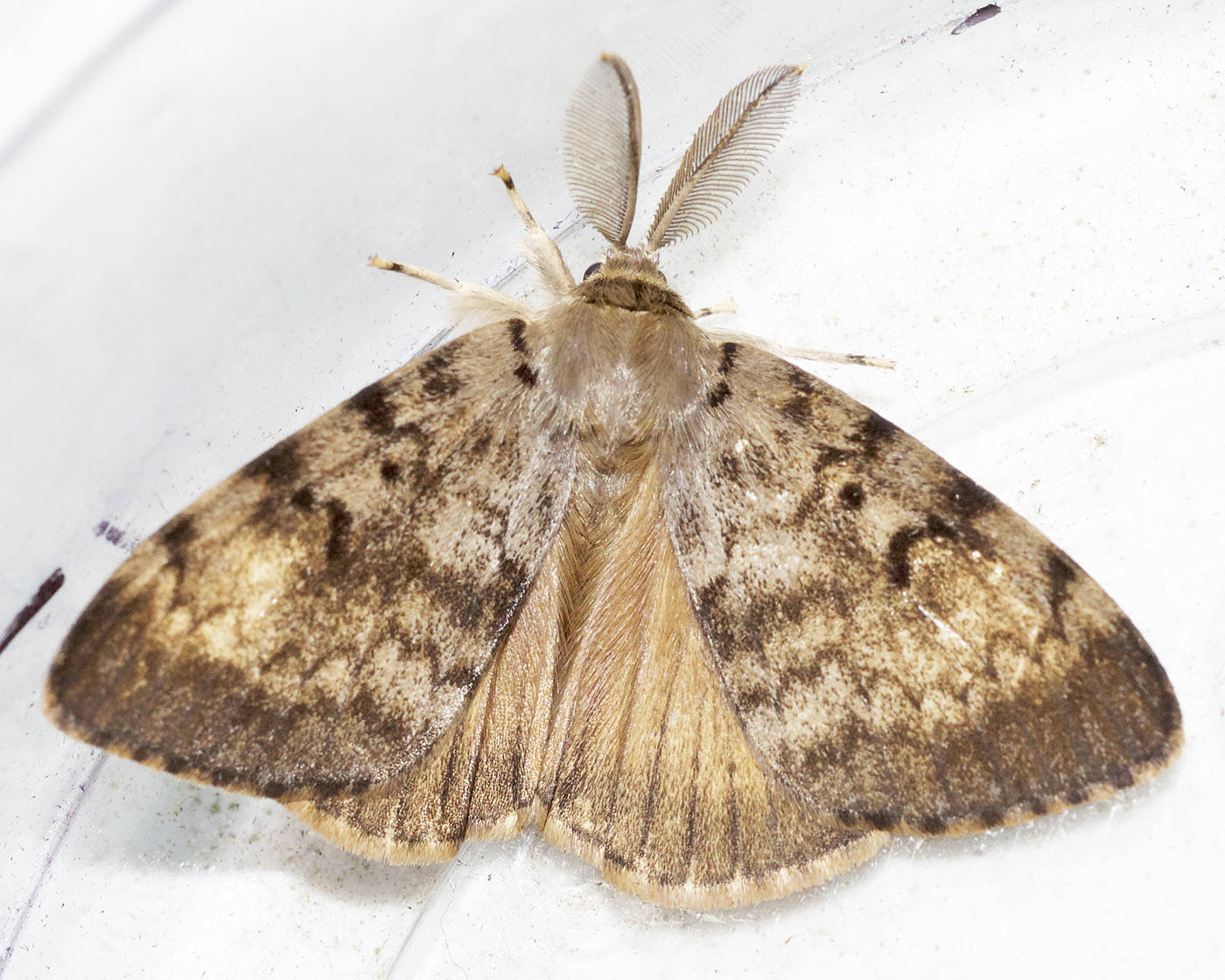
Male - LLD Moth 

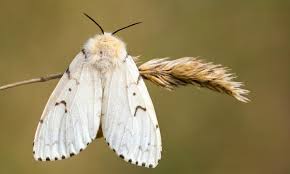
Female- LLD Moths 

Oh my, what a year was for LDD moths! Our property is surrounded by mixed forest and, these pesky moths are all over the trees. A local expert says he has not seen an infestation like this in over 30 years. If you suspect your trees are in trouble or you are merely curious, look up to the top of the trees and see if the leaves are missing.


Which I did, and to my dismay, the oak trees had been defoliated!

I called the arborist, and she called the bug specialist, who made some suggestions listed below. But first, I had to educate myself.

So, what is an LDD moth? A LDDmoth is an insect native to Europe and Asia that has been severely weakening trees across North America, arriving in Boston around the late 1860s. Despite the successful use of insect predators, as well as fungal and viral controls, LDD moth populations do occasionally reach outbreak levels and continue to expand their range.


LDD moth caterpillars defoliate host trees, mostly hardwood species; oak, birch, poplar, willow, maple and others. During outbreak years, nearly all broadleaf trees may be defoliated, caterpillars appear everywhere, and "frass" (caterpillar droppings) appear to rain from the trees. Adult LDD moths are only seen in mid-summer when temperatures are above freezing. This species is known to infest trees in woodland or suburban areas.


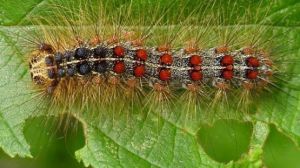
Caterpillars- LLD Moths

*HOW TO IDENTIFY LDD MOTH

Four development stages: egg, caterpillar, pupa and moth.

Caterpillars are 5-6 centimetres long with five pairs of blue dots and six pairs of bright red dots along their back.

Female moths are white with dark markings and cannot fly.

Male moths are brown and can fly.

Females are larger than males with a 5 cm wing span, males only span 2.5 centimetres.

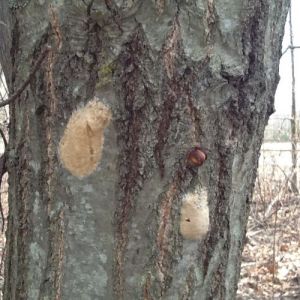
Egg masses are about 4 cm long, tan colored, and can be found on tree trunks, furniture, buildings, etc.


WHAT YOU CAN DO

Step #1.  Know what you are looking for and learn how to identify LDD moth during its various life stages. 


Step #2 Get rid of the egg masses by vacuuming them off the tree. 

*Scraping the egg masses carefully in a wide mouthed container filled with soapy water and leave them for at least 24 hours.  Some people suggest leaving them 48 hours in the soapy water.  


NOTE: Vacuuming the trees works great.  I bought an eight foot extension and used my wet vac.  Remember to take out the vacuum bag and put it in some soapy water.    

Also, it was a lot easier to see the egg masses at the end of winter in the trees devoid of their leaves. 

 

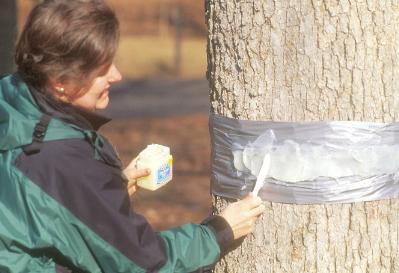
Step #3 -In the spring, you can put duct tape about a few inches wide around the tree at chest height and slather with petroleum jelly to stop the caterpillars from moving up the trees. Another excellent  product called Tanglefoot has a burlap band  which does not work as it gets wet and falls off so I advise just getting the tub of tanglefoot and making your own band. See below for making a Sticky Barrier Band with duct tape.


As this is my second year dealing with this I made my bands using polyester batting material cut about 6 to 8 inches wide.  This batting is wrapped around the tree and then I used plastic wrapping on a roller to hold it on the tree.  Then I used duct tape at the top and bottom and stuffed little pieces of batting up and under to seal off the crevices caused from the bark otherwise the caterpillars can go up and behind your band and get up the tree.  See pics.


MAKING A STICKY BARRIER BAND

Reduce the number of LDD moth caterpillars in your trees by putting up barrier bands before the caterpillars start to hatch in mid-May. Caterpillars crawling up the trees will mire down in the sticky material and die. Bands can keep caterpillars from migrating to other trees or from climbing back up if they fall off the tree (surprisingly common!).


Make barrier bands using duct tape and a waterproof, sticky material such as the Tanglefoot or petroleum jelly. When the bark is dry, use a strip of burlap and wrap duct tape around the burlap around the tree, shiny side out, pressing the tape firmly into the bark cracks to prevent caterpillars from slipping under the bands. The tape should be wrapped a few inches wide and placed around the tree trunk at chest height – about four feet above the ground.

A band of duct tape is needed to protect the tree bark from the sticky material, which could disfigure or kill the tree if applied directly. Smear the sticky material along the center of the band. (If you choose to use petroleum jelly, allow at least two inches of uncoated band under the jelly as it can melt and flow downward.) Periodically check the barrier bands to make sure they have not been clogged with insects, dirt or debris. Apply more sticky material as needed; check especially after a rain. You can take the barrier bands down in late July after the LDD moth caterpillars have pupated. 


TIP: I kept the bands up until after the moths died off.  The bands were covered with the female moths trying to climb up the trees and the Tanglefoot barrier worked great.  This means the egg masses will not be high in the trees next year so if I have to band the trees again they will have a good chance at not becoming defoliated twice!  

Step #4- Apply non-toxic products such as Bacillus thuringiensis, var. kurstaki or Monterey Garden Insect Spray (Spinosad) to the leaves of trees to kill gypsy moth caterpillars. For best results, sprays must be applied when caterpillars are young, less than one inch long. In instances where populations are high, two (or more!) applications five days apart might be needed.

*AzaMax  contains azadirachtin, the key insecticidal ingredient found in neem oil. This concentrated spray disrupts growth and development of pest insects and has repellent and antifeedant properties. Best of all, it’s non-toxic to honey bees and many other beneficial insects.

*Least-toxic botanical insecticides should be used as a last resort. Derived from plants which have insecticidal properties, these natural  pesticides have fewer harmful side effects than synthetic chemicals and break down more quickly in the environment.


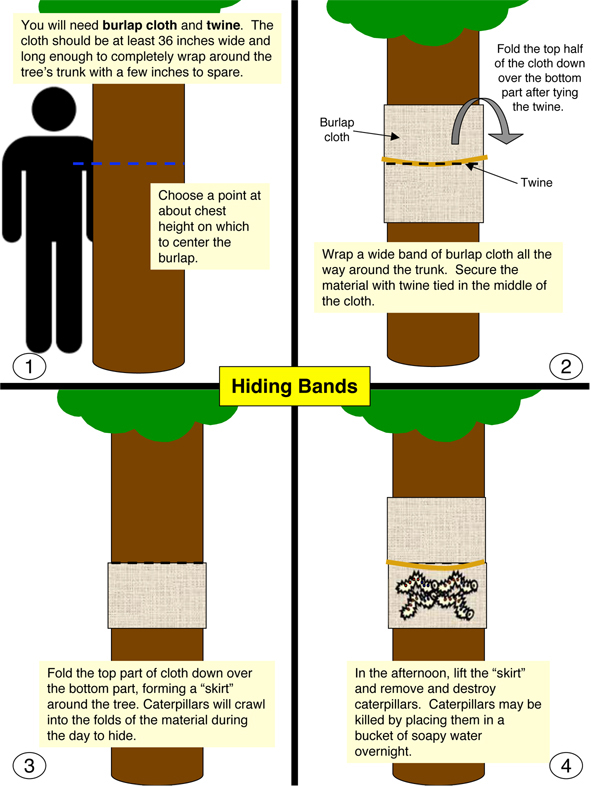
Step #5 - If you have a large population of caterpillars you will need to wrap burlap around the trees and tie with string in the middle of the burlap allowing half of the burlap to fold over.  The caterpillars do not like heat and will come down the tree to get cool.  The burlap is the perfect place for them to cool down.  I know this is gross but in the late afternoon pull up the burlap and reveal the caterplillars and pick them off and drown them in a bucket of soapy water with some bleach in it.    Keep in mind a full grown caterpillar can eat up to one square meter of leaves.  See instructions on the left. 

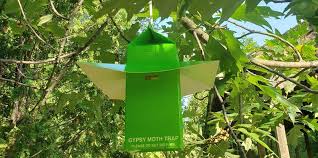
Step #6 - put out moth traps to stop the male moths from fertilizing the females - see pic below


Step #7 -Keep your trees healthy and better able to ward off attacks. In urban areas, water trees during dry spells and protect their root zone. In natural areas, good forestry practices will ensure healthier trees that are better able to withstand stresses such as defoliation.


*Report sightings in ONTARIO to the toll-free Invading Species Hotline at 1-800-563-7711 or email info@invadingspecies.co


Good Luck! 

(c) Wendolyn Murdoch


<